Exalted Chat: Web of Memories
I usually post reviews for gadgets and so forth, but this time I’m reviewing an online chat. It’s an online text-based roleplaying environment for Exalted, called Web of Memories.
First, a bit about Exalted
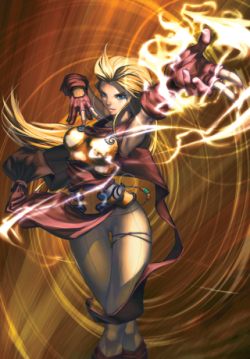
For those that don’t know about it, Exalted is a high fantasy game. Basically if you take Dungeons and Dragons, combine it with anime and wuxia action, and throw in some Greek and Roman epics, that’s what Exalted is like. In most roleplaying games you start out as someone fairly above average. In Exalted, you start out as a godlike being capable of carving their way through twenty enemy soldiers without breaking a sweat.
This is absolutely awesome for a tabletop game with friends. However, it gets… tricky when you’re dealing with a chat environment where there are dozens of these badasses walking around. Exalted have a tendency to change the world around them, so it makes it hard to keep to a canonical setting when you’ve got so many concentrated in one place.
Now about Web of Memories
Negatives
- It takes a while to get your character approved. True of any online chat really, though. You make your character, sit around in the main room, and hope to get a storyteller’s attention. Actually for this chat you need to be approved by two storytellers, to make sure that two eyes are on it to prevent things from being overlooked. And to be fair, most other chats I’ve seen have a “pre-sanctioning” process where an assistant storyteller has to approve your sheet first, and then a full storyteller will look at it; so two sets of eyes look over it regardless.
- There aren’t a lot of organized plots being run by default. If you want something, you have to ask for it. On the other hand, it seems that if you ask for it, someone will generally run something for you.
- The documentation could be organized a little better. They use a wiki system, and they do have helpful new player guides and so forth. But sometimes the information you need is spread across several wiki entries, and some of it isn’t there at all. As one example, when you first make a character, you need to enter the chat with (0/2) on the end of your name. Then when one storyteller approves you, you change it to (1/2). This isn’t mentioned anywhere in the documentation that I could find.
- Most people tend to hang around out-of-character in the entryway. This is also something that’s true of every chat I’ve been on. As I’m writing this, there are 25 people out of character, and only 3 people in-character. On the plus side, this means it’s easy to get to know people OOC, which leads to conversations of, “We should meet up IC and do this.”
Positives
- The people are nice, both players and STs. Everyone I’ve met on here is nice and seems to get along pretty well. I’m sure some people don’t get along with others on here, but I never see any of it out in the open. Yay for no drama! And the storytellers are very helpful — one even gives out his Skype information and encourages people to contact him that way if they need something and he’s not online.
- Generous XP policy. Most chats give you 0.5 XP each day that you log on, or something similar. This chat gives everyone a standard 5 XP per week, given out every Friday.
- Kick-ass character database. This is one of the things that really makes this chat shine, in my opinion. The database was made by a guy that works with Oracle, and most things are automated. Want to buy something with XP? Click a button, it gets submitted, your XP gets deducted, and it will automatically be added to your sheet when the training time is over.
- Relatively few house rules. The ones they do have are well-documented and make sense.
- Easy sanctioning process. This may seem at odds with the first item under “negatives,” but once a storyteller does look at you, the process is pretty smooth. It seems like in every other chat I’ve played in, storytellers see their job as incomplete if they haven’t made you change at least something on your sheet. My experience here? The only change I had to make was adding some references that I forgot to note down (forgot to note Anima appearance, and Favored Abilities).
- Player-run plots are encouraged. They even have a semi-formal system for “PSTs” (player storytellers). You run a scene, send the staff a log of what happened, and the staff assigns rewards based on it. I can’t emphasize enough how awesome this is. Only caveat here is that I’ve heard player-run stories don’t allow 4-dot rewards and above. So if you want that 5-dot Crown of Thunders, you’re going to have to get an official storyteller to run the plot for you.
So if you’re into Exalted, or thinking about getting into it, you should definitely give Web of Memories a try! My only character, currently, is Cathak Caldoras.